Bysonu
Explore Number Registry Archives for 3518015032, 3246825278, 3513230138, 3311159023, 3511066328
The inspection of number registry archives for 3518015032, 3246825278, 3513230138, 3311159023, and 3511066328 will map origins, issuances, and current status with disciplined exactness. Each entry is treated as a custody event, tracing transfers and holding references, while noting metadata and access controls. Patterns and anomalies will be cataloged to support provenance assertions. The work presents a stable framework, yet the next steps reveal gaps that demand careful verification.
What Number Registry Archives Reveal About Each ID
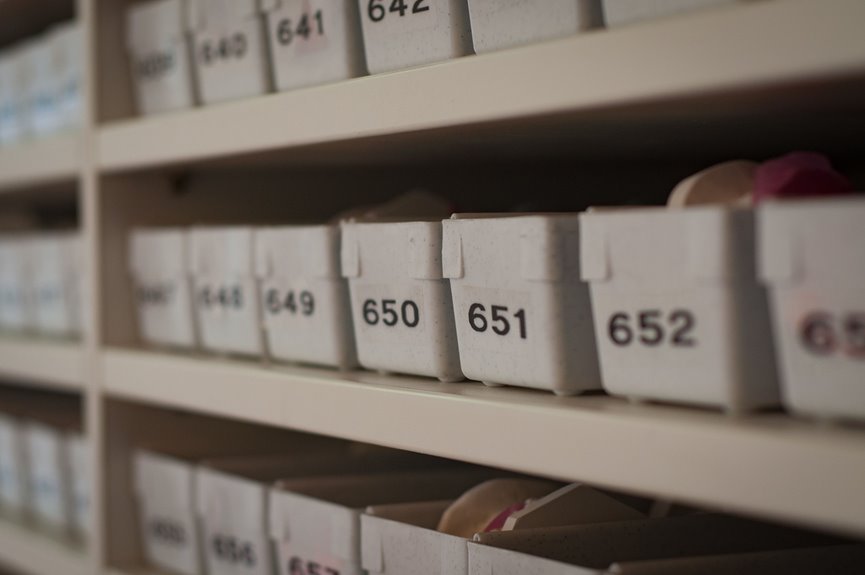
The Number Registry Archives provide a structured record of each identifier, enabling a concise comparison of attributes such as origin, issuance date, and status. Each entry demonstrates id provenance, revealing discrete trails of creation and custody. Ownership mapping emerges through cross-referenced records, clarifying current holders, historical transfers, and legitimacy. The archive supports deliberate assessment while preserving analytic, freedom-oriented scrutiny.
Tracing Origins and Ownership Across the Registry
Tracing origins and ownership across the registry requires a systematic examination of provenance trails, issuance timestamps, and custody records. The analysis of identifiers unfolds alongside ownership history, mapping sequential transfers, verifications, and custody milestones. Documentation preserves context, enabling researchers to assess legitimacy, chain-of-custody integrity, and provenance confidence. Methodical evaluation supports transparent stewardship without compromising archival clarity or researcher autonomy.
Patterns, Anomalies, and Cross-References in the Data
Patterns, anomalies, and cross-references emerge as essential signals in the data, guiding verification and interpretation across registries. The analysis patterns reveal consistent motifs and deviations, while ownership traces illuminate linkage arcs. Cross referencing pitfalls are cataloged to prevent misattribution, and archival integrity is preserved through meticulous documentation, audit trails, and standardized metadata, ensuring transparent, reproducible insights for researchers navigating registry archives.
Best Practices for Exploring Archives Safely and Effectively
Efficient exploration of archives requires a structured approach that emphasizes provenance, access controls, and metadata fidelity. Researchers should document data provenance, verify source legitimacy, and maintain chain-of-custody records. Adherence to archival ethics governs handling, reproduction, and disclosure. Protect data privacy through minimization and de-identification. Implement risk mitigation by risk assessment, backups, and access restrictions; preserve integrity, reproducibility, and transparency throughout the process.
Conclusion
In the hush of the archive, the identifiers stand as quiet beacons, each tag a keyhole into a layered archive. Provenance threads weave through custody logs like delicate sutures, binding origin to present with meticulous notation. Patterns emerge as constellations, anomalies as shadows that refine the map. The registry’s integrity rests on disciplined metadata, access controls, and transparent transfers, ensuring researchers navigate with autonomy yet within a guarded, legible ledger—where meaning accrues through traceable, symbolically immutable records.